Kozi Bora za Sayansi za Kusoma Mwaka 2026/2027 kwa Ngazi ya Diploma na Degree
Uchaguzi wa kozi sahihi unaweza kuwa hatua muhimu kuelekea mafanikio ya kitaaluma na kiuchumi


Suggested:
Tanzania's Snack Industry in 2026: Market Size, Leading Manufacturers, Food Science Innovations, and Future Growth Prospects
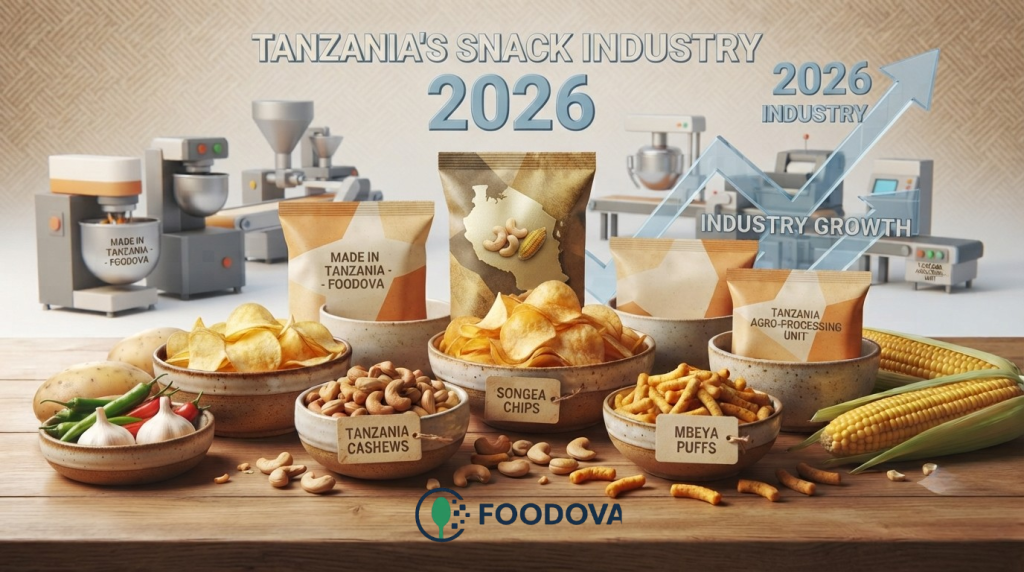
The snack food industry has become one of the most dynamic segments of Tanzania's food processing sector. What was once dominated by a limited range of biscuits and confectionery has evolved into a sophisticated market encompassing potato crisps, maize-based extruded snacks, cookies, crackers, popcorn, roasted nuts, frozen desserts, baked snacks, and a growing range of healthier alternatives. Increasing urbanization, changing consumer lifestyles, expanding supermarket chains, and a rapidly growing middle class are transforming the way Tanzanians consume food, creating significant opportunities for local manufacturers, agricultural producers, investors, and food scientists.
Tanzania's population, now exceeding 70 million, provides one of East Africa's largest consumer markets. Combined with economic growth and increasing demand for convenient ready-to-eat foods, this demographic advantage is expected to sustain strong expansion of the snack industry over the coming decade. Industry forecasts indicate that the Tanzanian snack market is likely to grow at an average annual rate of 6–7% through 2030, adding approximately USD 150–160 million in value during the forecast period. Within this broader market, potato crisps are projected to remain one of the fastest-growing categories because of rising consumer preference for premium savoury snacks, improved retail distribution, and continued investment in domestic processing capacity.
Although detailed financial information for private manufacturers is not publicly disclosed, Foodova Research has developed analytical estimates based on production capacity, retail presence, distribution reach, and observed market positioning. These estimates should be interpreted as informed market modelling rather than audited financial results.
Based on this analysis, Bakhresa Group (Azam) is estimated to control approximately 35–40% of Tanzania's organised snack market, supported by its diversified portfolio of biscuits, cookies, cakes, dairy products, ice cream, and other packaged foods. Assuming continued market expansion, the company's snack business could represent an annual market value of approximately USD 220–260 million by 2030. Its continued investment in manufacturing technology, extensive distribution infrastructure, and strong consumer loyalty position it to remain the industry's dominant player.
Mapinga Premium Foods Ltd has emerged as one of Tanzania's most promising premium potato crisp manufacturers. While considerably smaller than Bakhresa in overall scale, the company has established a reputation for producing high-quality crisps through modern processing techniques, careful raw material selection, and consistent quality assurance. Foodova Research estimates that Mapinga currently serves approximately 6–9% of the organised potato crisps segment. If current expansion continues, its potato crisp business could reach an estimated annual market value of USD 18–28 million by 2030, making it one of the country's leading specialist snack manufacturers.
Darsh Industries continues to strengthen its presence through biscuits, confectionery, and packaged snack products distributed throughout Tanzania and neighbouring markets. Based on current retail penetration, Foodova Research estimates the company may account for approximately 8–10% of the organised snack market, with potential annual revenues from snack products reaching USD 45–60 million by 2030 under current market growth assumptions.
Shanta Snacks has successfully positioned itself within the affordable snack segment, particularly among younger consumers, schools, and neighbourhood retailers. Through continued expansion of maize-based extruded snacks and value-priced products, the company could achieve an estimated market value of USD 20–30 million by the end of the decade if present growth trends continue.
Although Lodhia Industries is better known for edible oils and food ingredients than branded snack products, its contribution to the snack manufacturing ecosystem is substantial. By supplying edible oils, packaging materials, and food ingredients to processors across Tanzania, the company indirectly benefits from every percentage point of growth recorded within the snack industry. As domestic food processing expands, ingredient suppliers such as Lodhia are expected to experience parallel growth alongside finished-product manufacturers.
Among all snack categories, potato crisps deserve particular attention from investors and food scientists. Demand has increased steadily because of changing dietary preferences, greater availability in supermarkets and convenience stores, and continuous innovation in flavours and packaging. Foodova Research estimates that the Tanzanian potato crisps segment currently represents approximately 12–15% of the organised savoury snack market and could exceed USD 70–90 million annually by 2030, depending on consumer spending patterns and agricultural productivity. This growth creates opportunities not only for manufacturers but also for potato farmers, packaging suppliers, flavour manufacturers, edible oil producers, and logistics companies.
From a food science perspective, maintaining consistent product quality remains the defining factor separating premium brands from low-cost competitors. High-quality potato crisps begin with appropriate potato varieties possessing high dry matter content and low reducing sugar levels to minimise excessive browning during frying. Raw material quality directly influences oil absorption, texture, colour, and final product yield.
Equally important is frying oil management. Continuous monitoring of Free Fatty Acid (FFA) levels, Peroxide Value (PV), Total Polar Compounds, smoke point, and colour stability is essential for preserving flavour quality and extending shelf life. Failure to control frying oil degradation not only reduces product quality but also increases operational costs and food safety risks.
Manufacturers increasingly rely on laboratory testing to monitor moisture content, water activity, microbiological quality, sensory attributes, oil oxidation, and shelf-life performance. Combined with Good Manufacturing Practices (GMP), Good Hygiene Practices (GHP), Hazard Analysis and Critical Control Points (HACCP), and ISO 22000 Food Safety Management Systems, these scientific controls enable consistent production of safe, high-quality snack foods that meet both domestic and export market requirements.
Despite impressive growth prospects, the industry continues to face challenges including fluctuating edible oil prices, climate-related variability in potato production, rising packaging costs, increasing electricity tariffs, and competition from imported brands. Companies that invest in local agricultural supply chains, energy-efficient processing technologies, advanced packaging materials, and continuous product innovation are likely to outperform competitors over the next decade.
The future of Tanzania's snack industry extends beyond conventional potato crisps and biscuits. Consumer demand is shifting toward healthier baked snacks, cassava and sweet potato chips, reduced-fat formulations, clean-label products, protein-enriched snacks, and environmentally sustainable packaging. Manufacturers capable of integrating food science innovation with changing consumer preferences will be well positioned to capture emerging market opportunities both domestically and across East Africa.
Tanzania's snack industry is no longer an emerging sector—it is becoming one of the country's most important value-added food manufacturing industries. Continued investment in processing technology, agricultural productivity, food safety systems, research and development, and distribution infrastructure will determine which companies lead the market over the next decade. For manufacturers, investors, policymakers, and food scientists alike, the industry represents a compelling opportunity to drive economic growth while delivering safe, innovative, and high-quality food products to a rapidly expanding consumer base.
Uchaguzi wa kozi sahihi unaweza kuwa hatua muhimu kuelekea mafanikio ya kitaaluma na kiuchumi
Foodova is pleased to share that nominations are now open for the 2026 Zayed Sustainability Prize, a globally recognized award that celebrates organizations driving meaningful impact through sustainable innovation.
Every year, World Food Safety Day serves as an important reminder of the critical role food safety plays in protecting public health, strengthening consumer confidence, and supporting sustainable food systems worldwide.